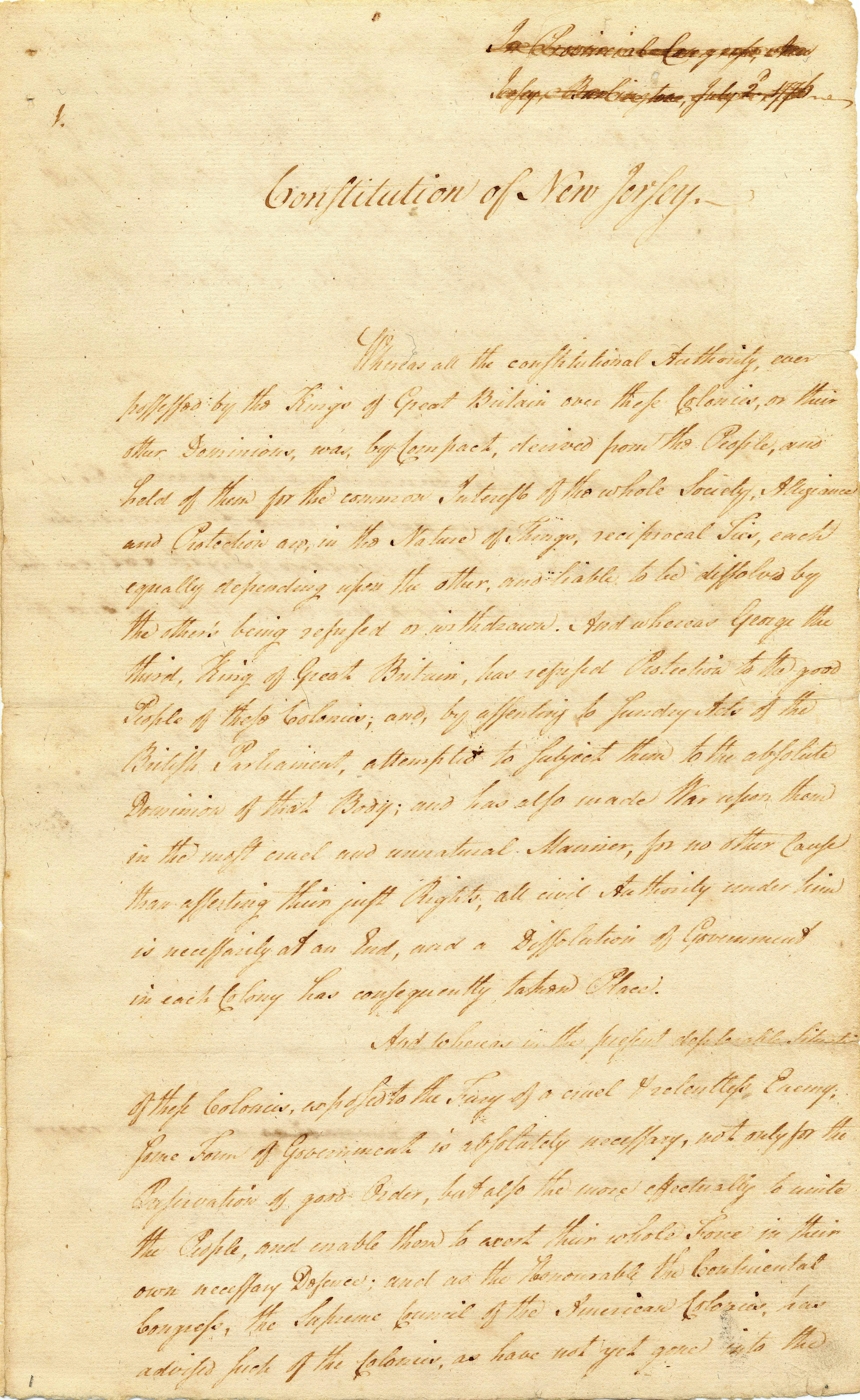
Of all the things I expected to find out from a museum about the American Revolution, I did not expect to find out about early US voting rights for women. I was under the impression that the suffrage movement began in earnest in the 19th century, and before that time women had no ability to vote in elections. I absolutely did not expect to find out that New Jersey’s State Constitution allowed not only women, elite or not, but also free people of color to vote in its elections.
This struggle to bring about representation could be best represented in the disagreements between Abigail and John Adams, with Abigail clearly having the foresight to recognize the similar struggle of not just the women but of the other disenfranchised groups in America. In a rather disappointing turn, John Adams responded with misogynistic remarks such as, “we know better than to repeal our masculine systems.”
So one must wonder how during this time such a unique voting climate came to exist. One must look at the regions, where as New England and the South were rather insular and homogeneous, the Mid-Atlantic region of New York, Pennsylvania, and New Jersey were very mixed in terms of people groups. This mixing did cause some amounts of tension, and not everything was perfect, but it resulted in a more accepting culture when it came to others. Pennsylvania was in fact the first state to pass a gradual emancipation law, and its Quakers would later find themselves at the forefront of abolition in the coming decades.
It’s then not a surprise to find that New Jersey’s voting laws were considerably more relaxed than that of its contemporaries, essentially requiring land ownership to qualify as a voter, and from 1776 to 1807 this was the case.
Unfortunately, there arose opposition to the inclusiveness of the vote, suspicion over foreign voters (from other states or overseas), and distaste for votes from still enslaved people; these thoughts making their way into the minds of many. These thoughts however were not the only reasons, and there appear to be five main points: the rise of partisan politics, regional diffences over views on slavery, voter intimidation at the polls, as mentioned before the fear of foreign influence, and “backlash” over women making political gains.
So, in 1807 women lost the vote in New Jersey, and for over a century they would struggle to get it back not just in their state, but nationwide. This exhibit adds great weight to the cause of voting rights for all, because just as enfranchisement has happened in American history, so has disenfranchisement as well. We must therefore do our best to retain our rights, or fearmongers and hateful beings will eagerly consolidate power by stripping it away.
 World Civ 1 SLy
Leave a comment