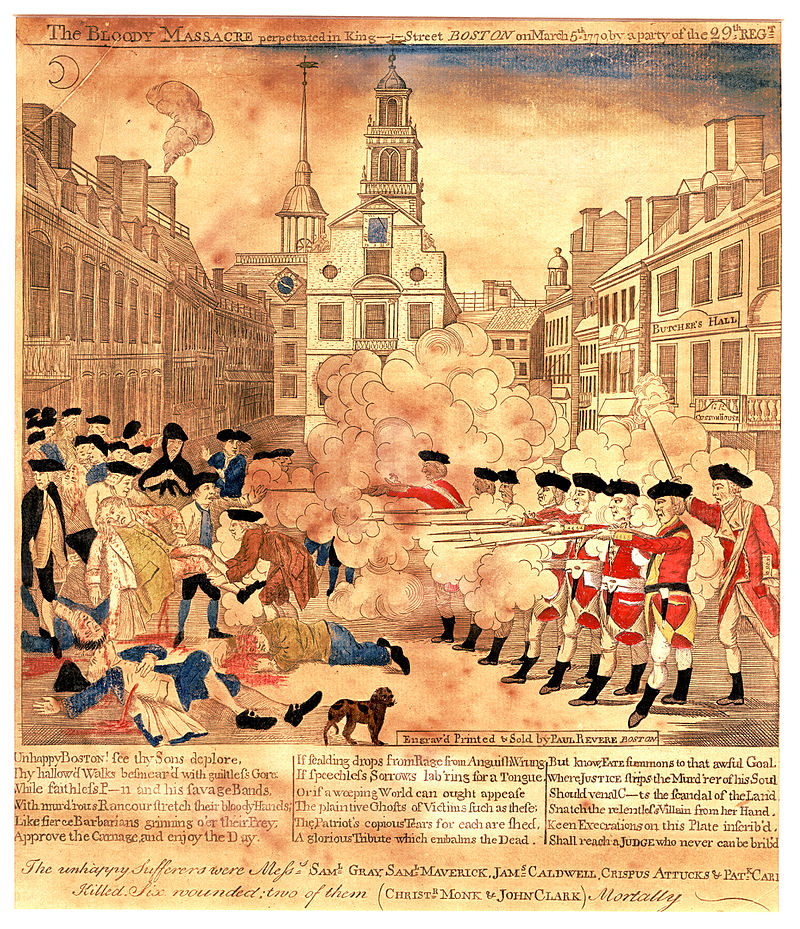
The point at which the American Revolutionary War became inevitable had to have been when the British carried out the plan to march from Boston to seize the militia storehouses in Lexington and Concord. Before that point, tension had definitely been on the rise for the past decade. The multiple acts levied by British Parliament and King George III that brought down new taxes, acts of defiance by the colonists such as the Boston Tea Party, the resentment many felt due to a lack of representation, the petitions sent that were never acknowledged, the violence of the Boston Massacre, and the revoking of New England’s charter putting under direct British rule; all of these things added up to create a hefty, trailing powder keg.
Given all of these factors, revolution was highly likely, but if different actions were taken, in particular by the government in London, things might very well have ended differently. A substantial concession from parliament, such as political representation in the government, or at least the beginning of a genuine dialogue between them and the Second Continental Congress, which was set to convene at Philadelphia merely days after the war began, would have left the revolution without steam.
Alas, peace was not to be. On April 19, 1775, the British regulars marched their way out of Boston, with men like Paul Revere rousing the minutemen to arms, first shots rang out of an eight year long war. Against all odds, the largest empire on Earth would be defeated by their former colony with the eventual direct aid of their main rival, forever changing the course of world history.
 World Civ 1 SLy
Leave a comment