The American Civil War was the bloodiest conflict ever fought on American soil. Its driving factor was over the issue of slavery, and for those who wish to deny that fact you can look up the letters of secession that multiple states who joined the Confederacy drafted and signed, such as Mississippi’s. Also, should you ever cross paths with someone who argues it was about “states rights”, do ask them “states rights to do what?” There will likely be an angry pause. In addition, if you hear them call Lincoln a “tyrant” or call the conflict “the War of Northern Aggression,” know that the first conscription law in American history was passed by the Confederacy and the free press was heavily censored, and that before the attack on Fort Sumter the secessionists had already raided and seized multiple Federal arsenals for months before war was declared.
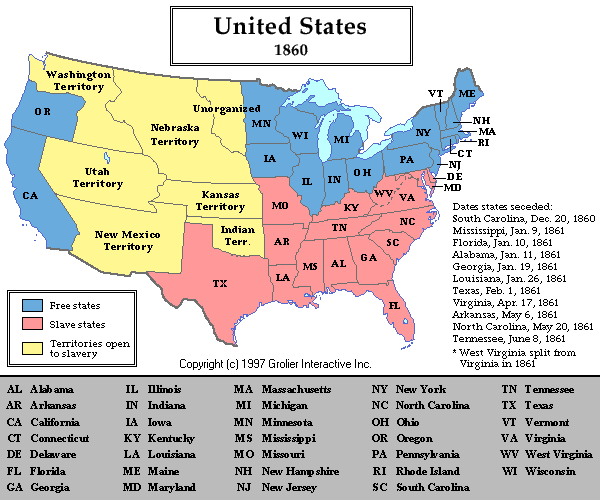
That out of the way, the point at which the Civil War became inevitable is hotly debated, with the extreme positions saying it never was and others saying as soon as the USA was founded. Of the more reasonable stances to take, John Brown’s Uprising and Abraham Lincoln being elected are the likely tipping points.
John Brown was a complicated man. He was undeniably a devout Christian and intense advocate for immediate emancipation, but not a very good tactician and strategist. His raid on Harpers Ferry, Virginia, in an attempt to seize arms for a massive slave rebellion and guerrilla war, went terribly. Many saw him as an insane old man, but through his writings, his oratory wit, and the help of his abolitionist friends and allies, public sentiment in the North shifted and he became a martyr for freedom. To the South he became a nightmare, and likely pushed the planter class to begin preparing for a rebellion of their own to preserve their exploitative institution.
Abraham Lincoln was a politician and former lawyer who in his presidential campaign vocally spoke out against the expansion of slavery into the United States’ new territories, although in 1860 he had yet to make any plans to eradicate it. He was removed from the ballot in multiple southern states, yet because of the four way split in the election, Lincoln won the plurality of the popular vote and the majority of the electoral. It was after this election result that the Southern states began to secede, before Lincoln was even inaugurated, thus marking the point of no return.

 World Civ 1 SLy
Leave a comment