-
Early Islam
In the beginning Islam bore some similarities to Catholicism, such as there being a previously established power that tried to destroy them both. One of the biggest differences is that Catholicism, and for that matter Christianity, was most notable for being non-violent towards those that persecuted the faith early on, meanwhile Islam grew and expanded as a result of wars.
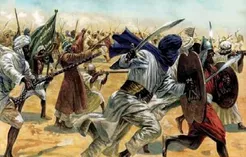
There were and still remain inextricable links between the two faiths, particularly in regards to the figures featured in their holy books. They both agree on there having been a man known as Abraham, and that there was a holy man by the name of Jesus who existed and preached the word of God. Both originate in the Middle East and many of the tales told in the Quran and Bible focus on that region.

It soon became apparent to all that this new faith and its people were on the rampage. In fact, the Byzantines and the Persians were beaten left and right when facing the Muslim armies. By the time their expansion had stopped, the religion of Islam ruled over one of the largest empires on Earth.

Meanwhile in Europe there were conflicts between pagans and Christians, and the forceful Christianization of the continent sprung up around this time as well. All this leaves us with the typical dynamic seen into the modern day, with a primarily Muslim Middle East and a mostly Christian Europe.
-
The “Dark Ages”
When Rome fell there was anarchy across the empire. At least, the Western half, the Eastern Roman Empire was just fine. In fact the entire rest of the old world was doing relatively fine.
This does not however detract from the impact this would have on Europe for centuries to come. The institutions set up to maintain vital infrastructure such as roads and aqueducts were no more. The various ethnic groups once under Roman dominion carved out their own territories and went to war.
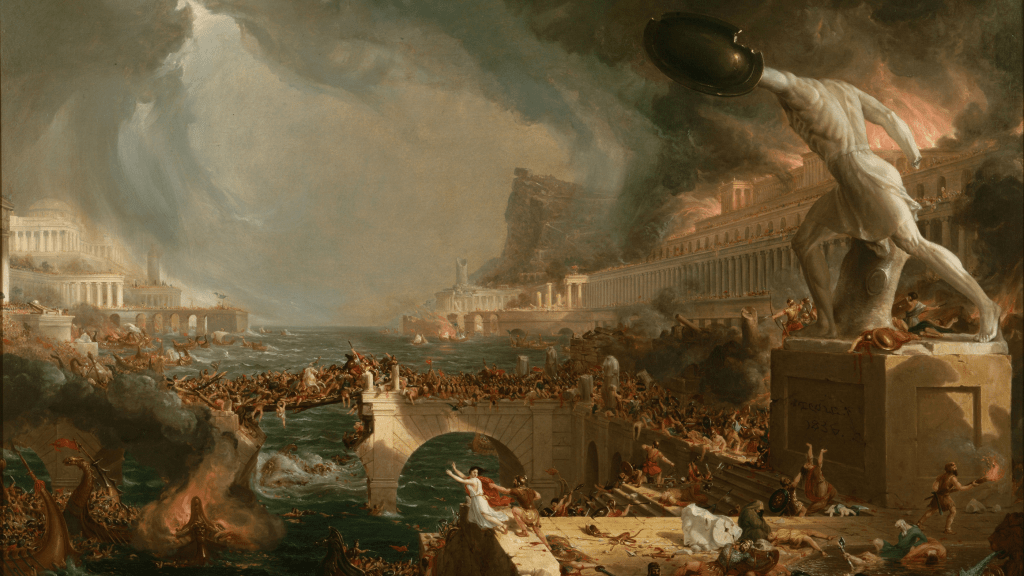
“The Fall of Rome” When using the term “Dark Ages”, one must understand that this is referring to a period of several centuries, particularly in Europe, after the fall of the Roman Empire. In the rest of the world life went on, empires rose and fell, Islam was founded and China went through several dynasties.
The Islamic Golden age came about during the late Dark Ages, with the city of Baghdad becoming a proverbial Mecca of knowledge and academic learning. Most of the surviving ancient classics came out of this period. Even before that time there were Irish Monks who kept the tradition of literature alive in Europe, diligently copying down older works in their monasteries, illustrating wonderful illuminations in the margins of their works.
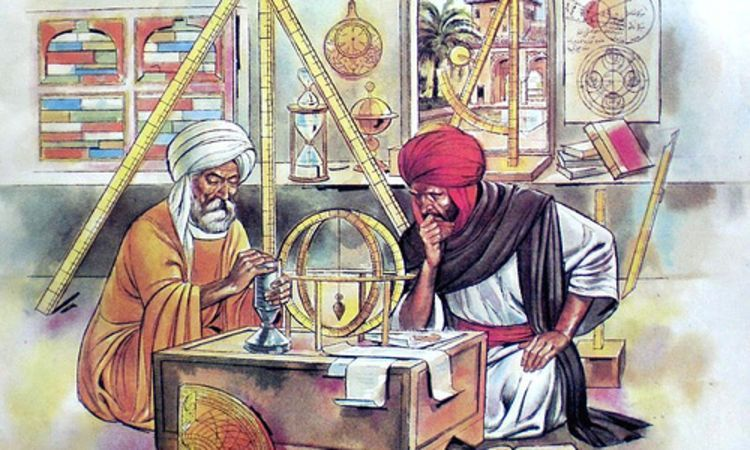
“Islamic Golden Age” It was not the most productive or explosive era in European history, but it was not as though the world stopped turning for centuries. People still lived their lives, fought for their homes, worshiped God or their gods. In my opinion, to call this period the “Dark Ages” suggests that the lives of these people did not matter. I also firmly believe that the early kings and figures of the Medieval Europe would strongly disagree with that mindset, for the survival of their ancestors led to their eventual rise.
-
Rome
The assassination of Julius Caesar is considered by many to be a pivotal moment for Rome. If asked the question, “would you have stabbed Caesar?”, I would say “no, because it would have accomplished nothing.” The Roman Republic was in turmoil, political violence was commonplace, and the citizens and subjects had become tired of living in a state of constant chaos. Caesar was an elite, but still a man who rose to power through his ambition and drive. He was however not a champion of restoring the republic to its old traditions, but sought power and influence for himself.
Rome had long departed from its tradition of simplicity and embraced the trappings of luxury, and Caesar used his family’s vast wealth to his advantage by buying the support of the people. He was not the only individual to do so, but was certainly the most prominent to benefit from the practice. He had a difficult life, with his father’s death at 16, his life threatened by political enemies of his family, and having even been captured by pirates. Despite all this he overcame these challenges which likely raised public support of him.
His military conquests and achievements in Britannia and Gaul, and his diplomatic ability with foreign powers such as Egypt found him as the most powerful and influential man in Rome, much to the chagrin of his political colleagues. The senate of Rome had long since become a hub of factionalism and violence, with mobs provoked by politicians every so often plying the streets of Rome for political targets. There were countless civil wars over the prior century between influential Romans, with Pompey the Great and Julius Caesar’s struggle just being another one.
The triumvirate was never going to fix the systemic problems in Rome’s government, and the republic was poised for collapse. So when Julius Caesar, the most popular man in Rome, and just recently promoted to ‘dictator for life’, was stabbed and killed in the Senate, its fair to see this as an exclamation mark rather than a period to the statement: “Thus through violence the empire was born!”
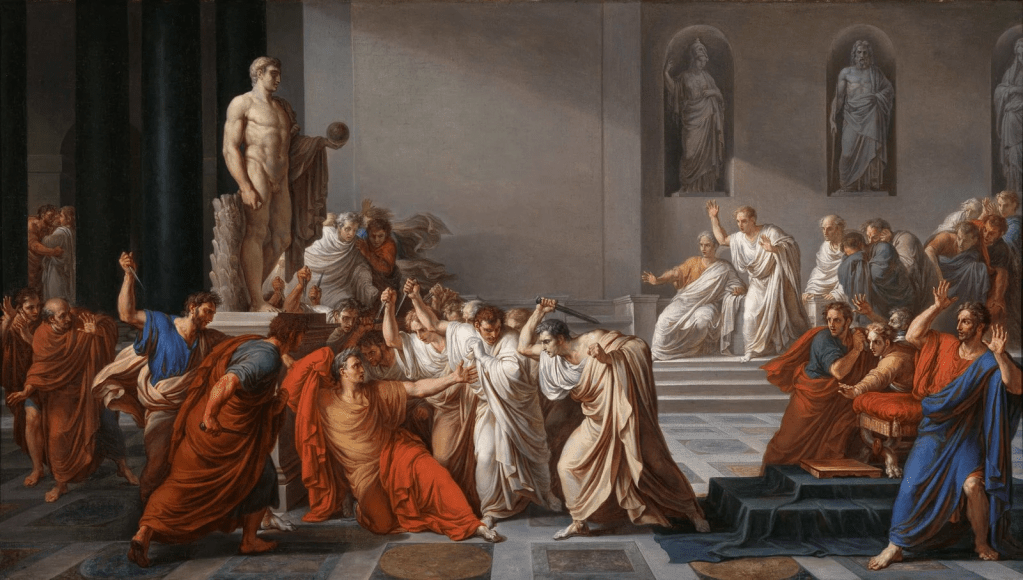
“Julius Caesar is Assassinated in the Senate” -
Ancient Greece
The legacy of Greece has been enormous. From literature, to military tactics, to philosophy, to history; their true impact cannot be fairly laid out in a blog post. Regardless, I will do my best to summarize a few major points.
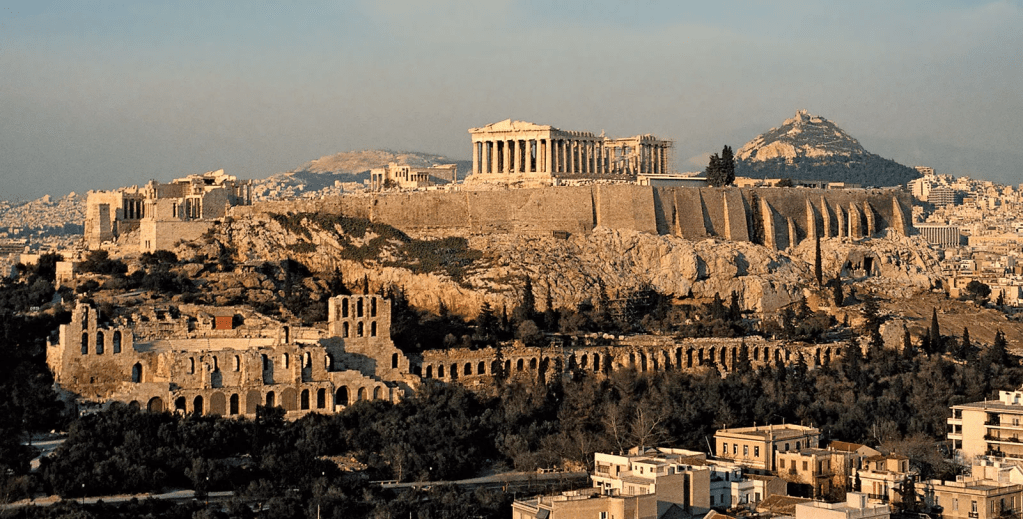
“The Acropolis of Athens” Starting with their impact on literature, Homer’s Iliad and Odyssey have become staple stories that have been referenced, performed, and reinterpreted for centuries. Greek tragedies set the stage for playwrights like Shakespeare to improve upon the art. Greek philosophy has formed the bedrock of western thought, such as Socrates, Plato, Aristotle, and in recent years more obscure men such as Democritus and Diogenes.
In terms of military achievements, the Greeks are legendary. The Spartan led last stand at the Battle of Thermopylae has rung down through the ages as ‘the’ defensive battle against an overwhelming enemy force. The earlier Battle of Marathon and victory of the Athenians is honored, even if unintentionally, by the physical events of marathons. The ancient ‘blitzkrieg ‘ of Alexander the Great across the Middle East to the borders of India reshaped countless cultures, and his success remained the envy of conquerors millennia after his death.
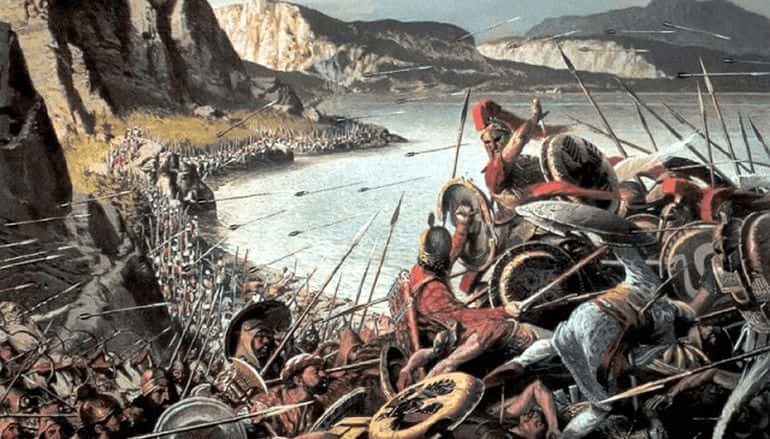
“The Battle of Thermopylae” In terms of mythology, the gods of Olympus and countless Greek figures have remained, even if not all their portrayals are accurate. Some have remained as symbols of power but given other names, others referenced in our weapons, many referenced in other famous works, and their original names even being used by companies.
In the modern era there are multiple nations that embrace the Greek tradition of democracy. Although it can be messy, and despite centuries of authoritarian systems, its legacy has endured, and now its lies at the core of one of the most powerful nations on Earth, the United States of America.
-
Ancient China (kinda…, not really, not even close)
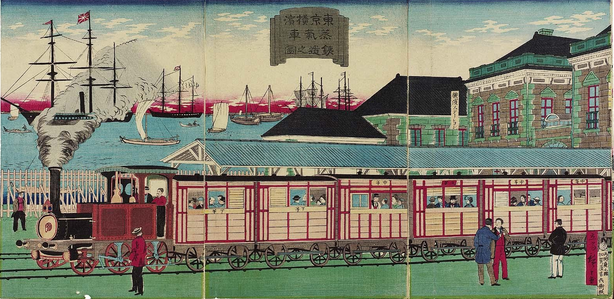
If I could live in any East Asian nation at any time, I would like to live in Japan during the Meiji Period. Before this time Japan experienced a several century period of isolation where no one could leave and no one could enter the country, with the only exception being the Dutch at the port of what is now Nagasaki. And so life would go on this way until 1853, when a squadron United States Navy vessels headed by Commodore Matthew Perry arrived in Edo harbor. After lengthy negotiations, the Tokugawa shogunate opened the borders of Japan to the outside, and foreign powers started pouring in.
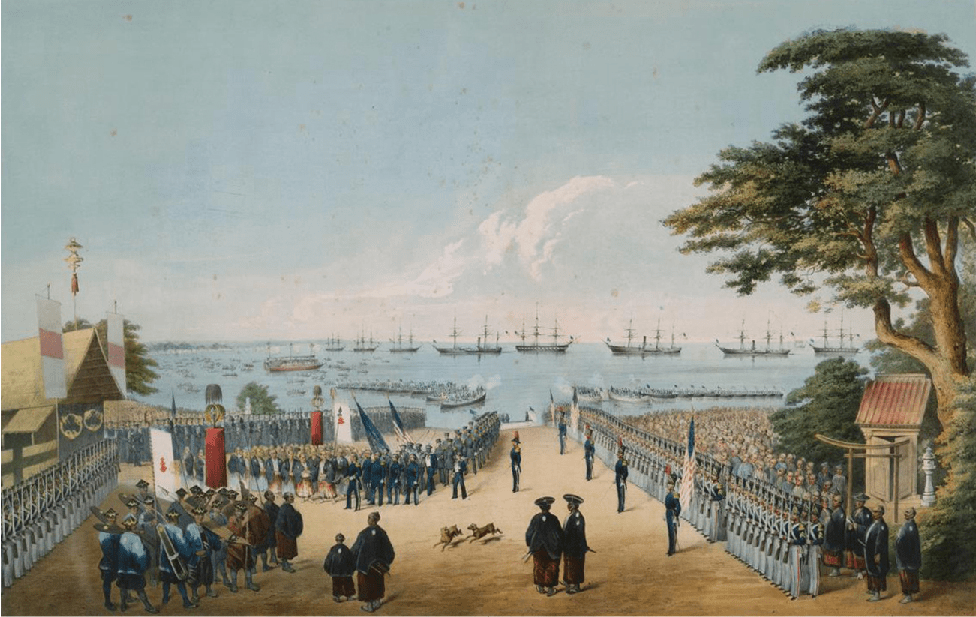
“US Warships in Edo harbor” At the time the the various classes of Japan began to shift in their power dynamics; many of the once mighty Samurai class becoming poorer than the farmers and merchants they used to look down upon. While many benefited from the changes, discontent stirred in the southern portion of the nation. The prefectures of Choshu and Satsuma took up arms against the Shogunate, and with limited outside assistance from the British, overthrew it and restored the emperor as head of the nation. A young Emperor Meiji set about limiting foreign influence, but did not restore the samurai class to a position of importance. He did however allow many of its members positions in his government and armed forces. After putting down the Satsuma Rebellion, he went on to oversee his nation’s rise to international prominence. The incredible feats of the Japanese in the Russo-Japanese War, and the utter destruction of the Russian Navy during the Battle of Tsushima Strait secured their place as a world power, avoiding the fate of a fractured and European dominated China.
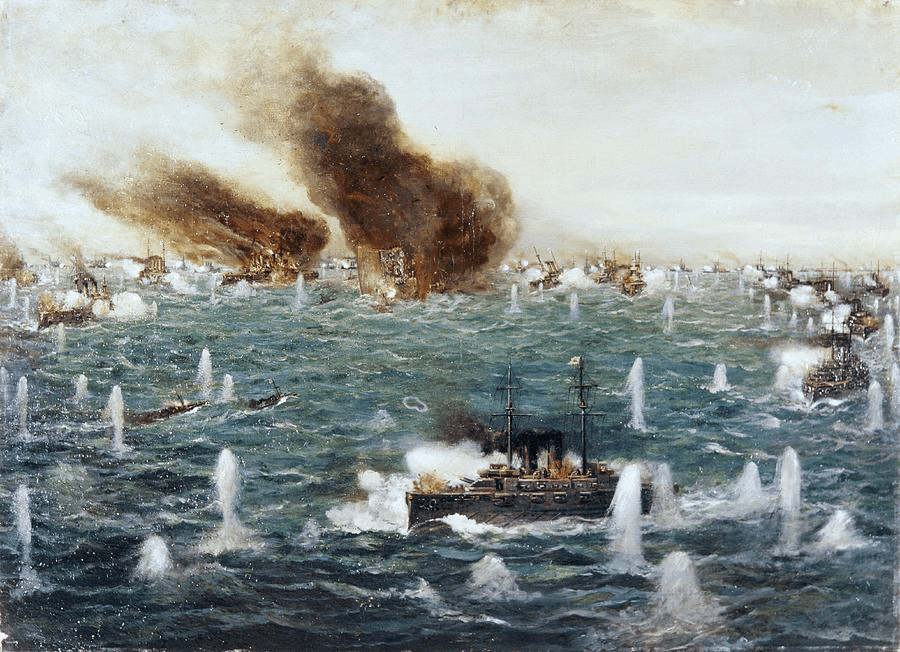
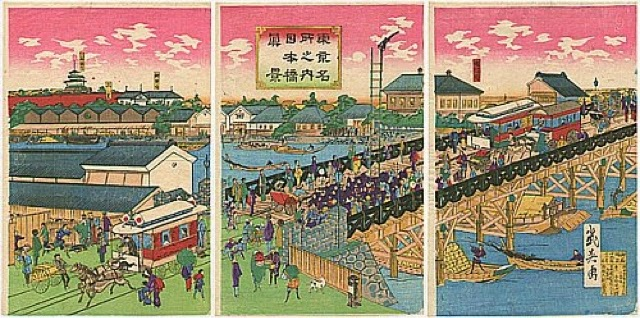
“Japan decimates the Russian fleet during the Battle of Tsushima Strait” In a matter of 40 years Japan went from a feudal 17th century nation to a modern constitutional monarchy. Steam locomotives, electricity, factories, coal powered warships, telegraph lines, western fashion, all contrasted with retained traditional aspects; surely this would make for an astounding era to live through.
-
Ancient/Early Medieval India
I barely knew anything save for the more philosophical/religious aspects of Indian culture. The new information that stood out was the history of Chandragupta, his son and his grandson. For starters, we in the West are at least acquainted with Alexander the Great, so it comes as a surprise to learn that Chandragupta not only met him, but would go on to defeat the empire left in his wake that was controlled by General Seleucus. And so he began his conquest of the Indian subcontinent establishing the Mauryan Empire, for years waging war. Yet when he grew older, instead of becoming a crazy old man desperate to hold onto power, he retired and relinquished his power to his son. Of all the things a man who devoted his life to conquest could do, joining the religion of Jainism, who’s central principle is non-violence to an extreme degree, seems ironic but I can’t fault the guy for wanting peace in his life.

“Chandragupta” Bindusara was the son of Chandragupta and father to Ashoka, and so has an unfortunate shadow cast over his legacy by the two giants towering over him. In short he expanded and preserved the Mauryan Empire, which leads us to his son.
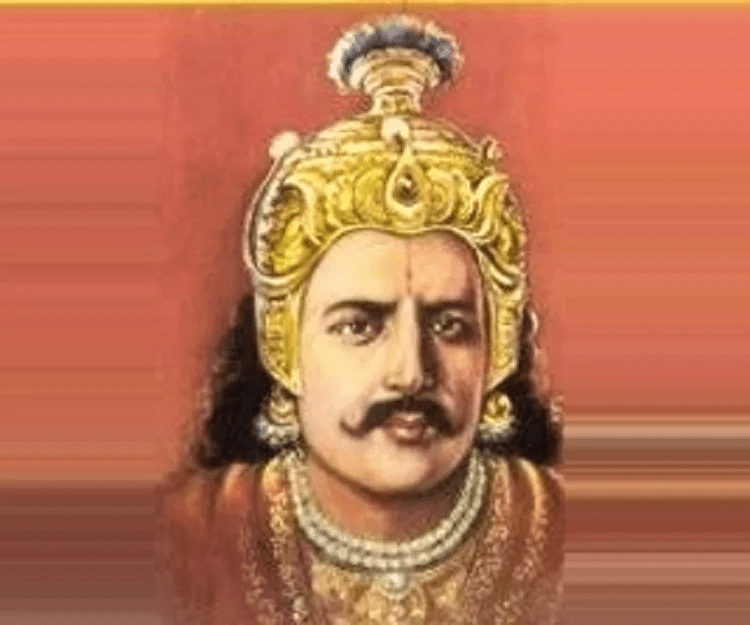
“Bindusara” Ashoka Maurya, also known as Ashoka the Great, was much like his grandfather, and although never fully conquering all of India, he brought the empire’s borders to their height. The way he achieved this was through the classic conqueror method of violence, so it seems bizarre that he embraced Buddhism which was also a non-violent religion. He set up Buddhist temples around the empire and was the only time in India’s history that the state religion was Buddhist. It seems rather poetic that both grandfather and grandson turned to non-violent faiths in their later years.

“Ashoka the Great” -
Ancient Egypt
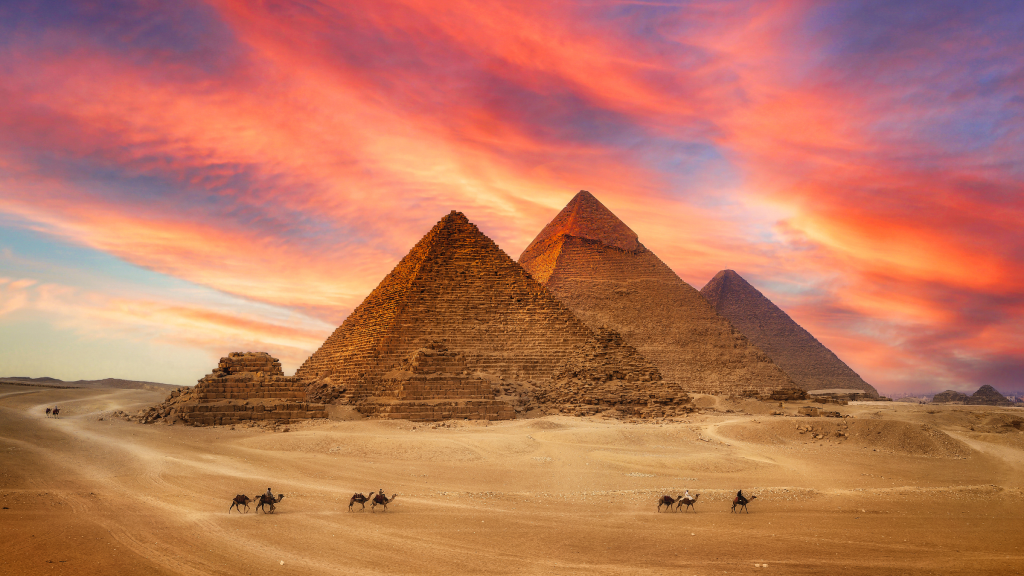
“The Great Pyramids” I was first introduced to Egypt by my sister. She went through an Egyptian phase when I was very young and I learned through osmosis that there was a culture called the Egyptians, they had a lot of gold, multiple gods and their language was crazy looking. Being the odd kid I was, I watched a lot of educational TV, but there was this cartoon based upon Egypt that I would watch that came from the Discovery channel, and in different episodes of other shows there would be at least one episode or short movie dedicated to the location and mystery of Ancient Egypt. Some of what I learned from these shows were bits of lore behind some of the gods, the fall of Egypt to Rome, the supposed “King Tut’s Curse”, the mummification process, the Rosetta Stone is a boring government document, and that the pyramids were actually tombs. I recall having an aversion to Egypt because of the tale of Exodus and how they treated the Jews, but when I heard they fell to Rome too, sympathy found its way in. It was only much later that I learned it was not the Jews who built the pyramids but regular Egyptians. In fact, there is little evidence that the Jews ever resided in Egypt in large numbers and that the story of Exodus is more mythical/allegorical than fact.
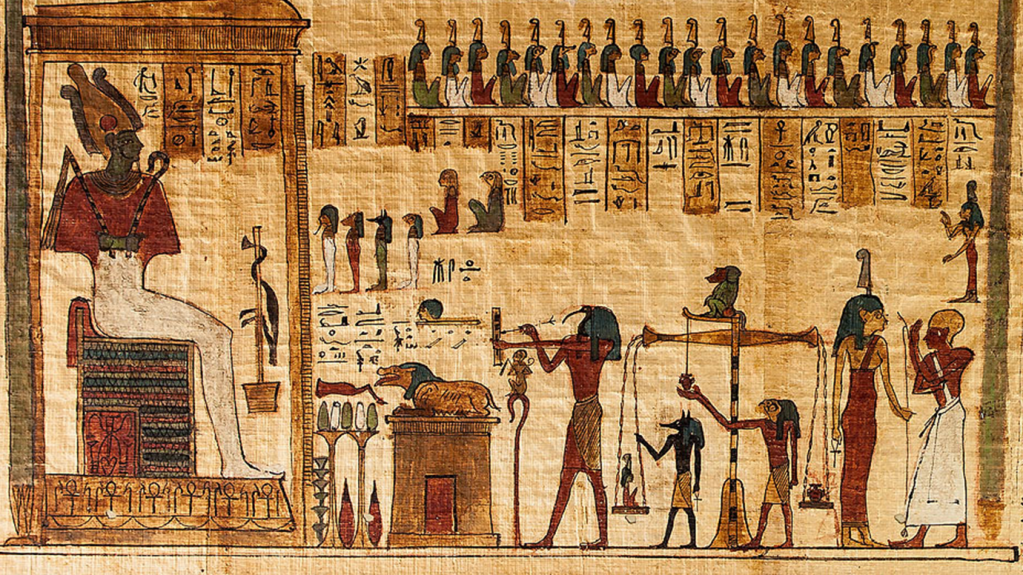
“Osiris presides over the Weighing of the Heart Test” I knew of Hatshepsut beforehand, I had actually watched the exact same video on her we viewed in class. Beer being the main form of payment to workers was not lost on me, nor was the importance of the Nile River in making Egypt the breadbasket of the ancient world. The whole fiasco with Akhenaten was fun to re-explore, as was his son’s rediscovery and immortalized legacy as one of the most famous pharaohs of all time, King Tutankhamen.
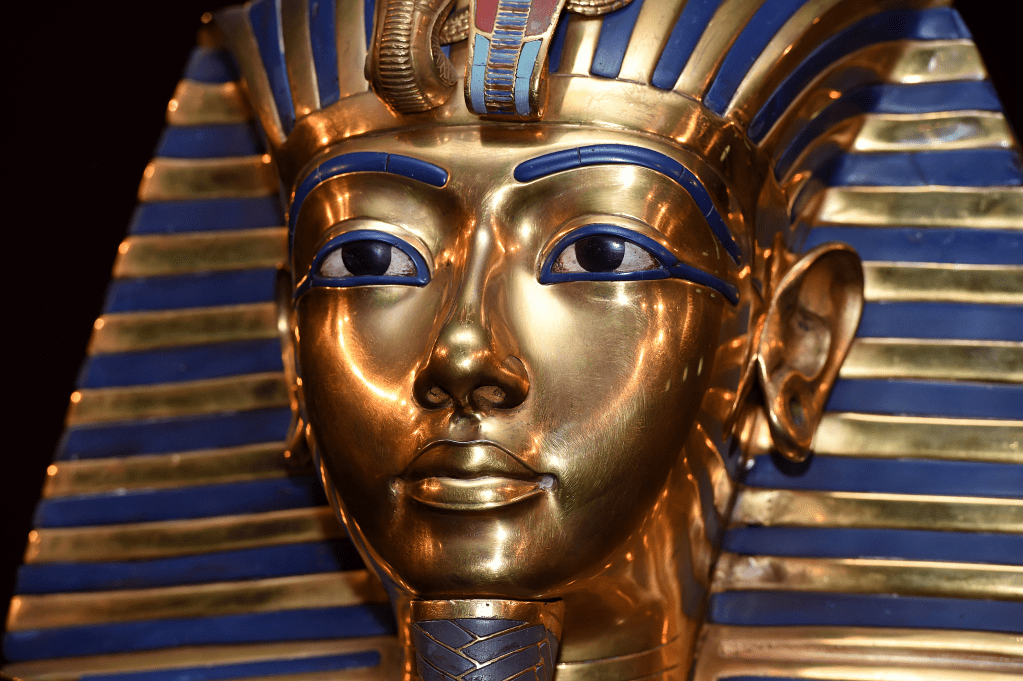
“King Tut’s Burial Mask” -
Hello World!
Welcome to WordPress! This is your first post. Edit or delete it to take the first step in your blogging journey.
-
Subscribe
Subscribed
Already have a WordPress.com account? Log in now.
 World Civ 1 SLy